Adriane Michaelis, PhD Candidate, Receives the NSF Doctoral Dissertation Research Improvement Grant
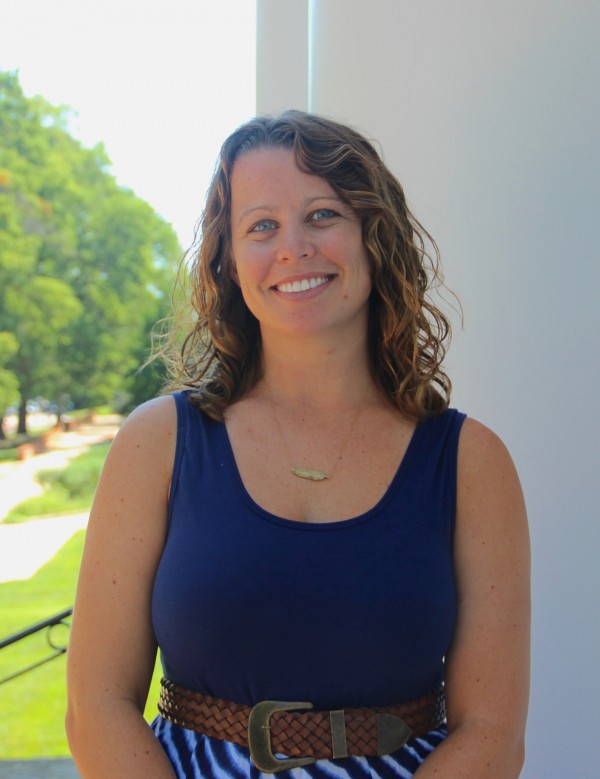
Congratulations to Adriane Michaelis who received the NSF Doctoral Dissertation Research Improvement Grant to study the "Dynamic Socio-economic Systems and Cultural Ecosystem Services: The Case of Oyster Aquaculture”. Over the next year, Adriane will be conducting comparative research on the cultural ecosystem services offered by oyster aquaculture in three regions: the Chesapeake Bay, Gulf of Mexico, and coastal New England. This NSF funding will allow her to build on her previous pilot work looking at oyster aquaculture's contribution to livelihood diversification and resilience, which was funded by a Maryland Sea Grant Coastal Resilience and Sustainability Research Fellowship.
ABSTRACT
"The research supported by this award will investigate cultural ecosystem services. Ecosystem services, the benefits provided by an ecosystem, are one basis for assigning value to healthy ecosystems. Services include the capacity of an ecosystem to provide food and water, to help mitigate environmental impacts, to produce essential nutrients, and to provide cultural opportunities and experiences. Cultural ecosystem services, such as fishing and birdwatching, are hard to price, however, and consequently have received less attention even though they may outweigh other services in terms of perceived importance. To enhance understanding of cultural ecosystem services, the researcher will investigate fishing-related cultural services and the impacts that may result from the introduction of aquaculture to supplement or replace declining fisheries. The research is important because fisheries throughout the United States are threatened. Communities risk losing the industry that shaped their towns, local identities, and associated jobs unless alternatives are introduced that can match all of the services associated with their declining fishery, including the highly valued cultural services.
The research will be undertaken by University of Maryland anthropology doctoral student Adriane Michaelis, who is supervised by Dr. Laura J. Shaffer. The researcher has chosen to focus on oyster aquaculture, which, although known to provide many of the services associated with wild oyster fisheries, has not been studied from the perspective of its associated cultural services. The research has a comparative design. Data collection will take place in three culturally distinctive regions -- the Chesapeake Bay, the Gulf of Mexico, and coastal New England --where aquaculture of the eastern oyster (Crassostrea virginica) now occurs. The research is framed with three overarching questions: 1) What are the cultural services obtained through oyster aquaculture and how do they rank amongst related ecosystem services? 2) How do these cultural services vary regionally and according to different participant attributes? 3) Can oyster aquaculture provide the same types of cultural services as public fisheries? The researcher will gather data through a mix of ethnographic methods including through semi-structured interviews with oyster farmers, commercial fishermen, and community members; participant observation; photovoice; and a Q-sort survey using a standard platform. By looking at the effects of shifting from public to private fisheries, findings from the research will contribute to improved social scientific understanding of socio-ecological systems as dynamic systems. Findings will also help resource managers expand their understanding of the costs and benefits of different management choices."
Published on Mon, 07/23/2018 - 11:11