Genetics & Evolution
Genetic and Evolutionary Anthropology focuses on the use of DNA analyses and molecular tools for the study of humans, and humans' role in nature. The methods are biological primarily, but the research questions most often focus on what makes us human, human diversity, human evolution, species co-evolution, adaptation, and migration.
The program in Genetic and Evolutionary Anthropology is designed to appeal to students who are interested in gaining a strong practical foundation in DNA laboratory and phylogenetic analyses, as well as a theoretical foundation and instruction in a range of evolutionary and bio-cultural topics in anthropology and beyond.
PROGRAMS OF STUDY
Bachelor's Degrees (BA or BS)
The Department of Anthropology offers both a Bachelor of Arts (BA) degree and a Bachelor of Science (BS) degree. The BS degree is more specialized and requires more math and science courses. Both degrees offer a strong foundation on which to build a professional career.
Master's Degree (MAA)
The Master of Applied Anthropology (MAA) is designed for students interested in careers outside of academia, as well as those who plan on continuing to a Ph.D. The program requires coursework in core classes, an internship, and courses in various subfields of anthropology.
Doctoral Degree (PhD)
The focus of the Doctor of Philosophy (PhD) program is theoretical and methodological advancement and to direct original research, with the aim of improving anthropological practices and to contribute to the value and usefulness of the discipline. Doctoral students are rigorously trained and prepared for research and development careers, as well as for academic careers.
Foundational Knowledge Courses:
ANTH221: Introduction to Forensic Sciences
ANTH222: Introduction to Ecological and Evolutionary Anthropology
ANTH320: Method & Theory in Evolutionary Anthropology
ANTH322: Method & Theory in Ecological Anthropology
Electives (Among others):
ANTH266: Changing Climate, Changing Cultures
ANTH341/641: Introduction to Zooarchaeology
ANTH362/662: Anthropology of Food
ANTH425/625: Molecular Anthropology
ANTH432/632: Multispecies Coexistence
Academic Opportunities
Beyond required coursework, students have many opportunities to expand their learning: field schools, research with faculty, teaching assistantships, internships, independent studies, and study abroad programs.
Internships and Career Development
The program faculty is committed to assisting students in identifying internship and career development opportunities that integrate an genetic/evolutionary anthropology focus with their own interests. In the past, students have completed internships with various governmental, non-governmental, and private organizations in the nation’s capital and beyond.
PROGRAM FACULTY
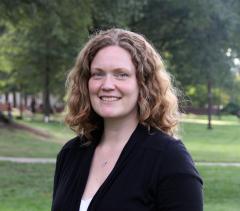
Expertise: modern genetic diversity of human populations from Micronesia, Melanesia, Central and South America; genetics of domestic animals and the cultural and biological implications of animal domestication on human evolution, population history and migration
CONTACT US:
Erik Hanson
Assistant Director of Undergraduate Studies Program
301-405-1436
ehanson@umd.edu
Nadine Dangerfield
Assistant Director of Graduate Studies
301-405-4 737
nadine@umd.edu