
Forensic Aviation Archaeology Field School Continues Successful Partnership with Defense POW/MIA Accounting Agency
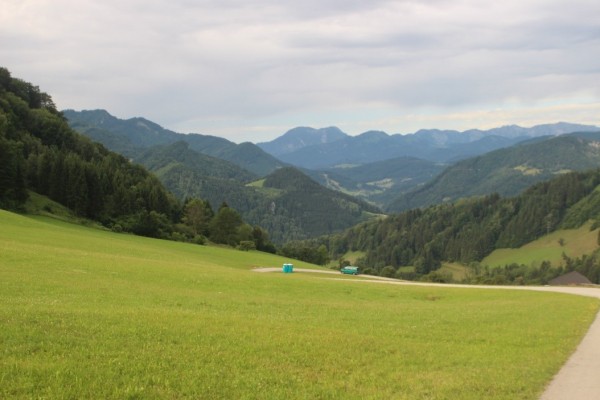
The Forensic Aviation Archaeology field school recently completed another successful year. The archaeological field school is a pilot program to test the feasibility of partnerships between universities and the Defense POW/MIA Accounting Agency (DPAA) to further their mission to bring back US soldiers still missing from past conflicts.

Chargé d’Affaires Eugene Young from the US Embassy in Austria visited the archaeological site in 2017 and received a tour by Co-Director Adam Fracchia
For the last two summers, the University of Maryland Forensic Aviation Archaeology program, led by Marilyn London and Adam Fracchia and working in collaboration with the University of Vienna, has conducted excavations in a site in rural Austria to recover missing airmen from the Second World War. According to DPAA, 72,000 Americans remain unaccounted for from World War II.
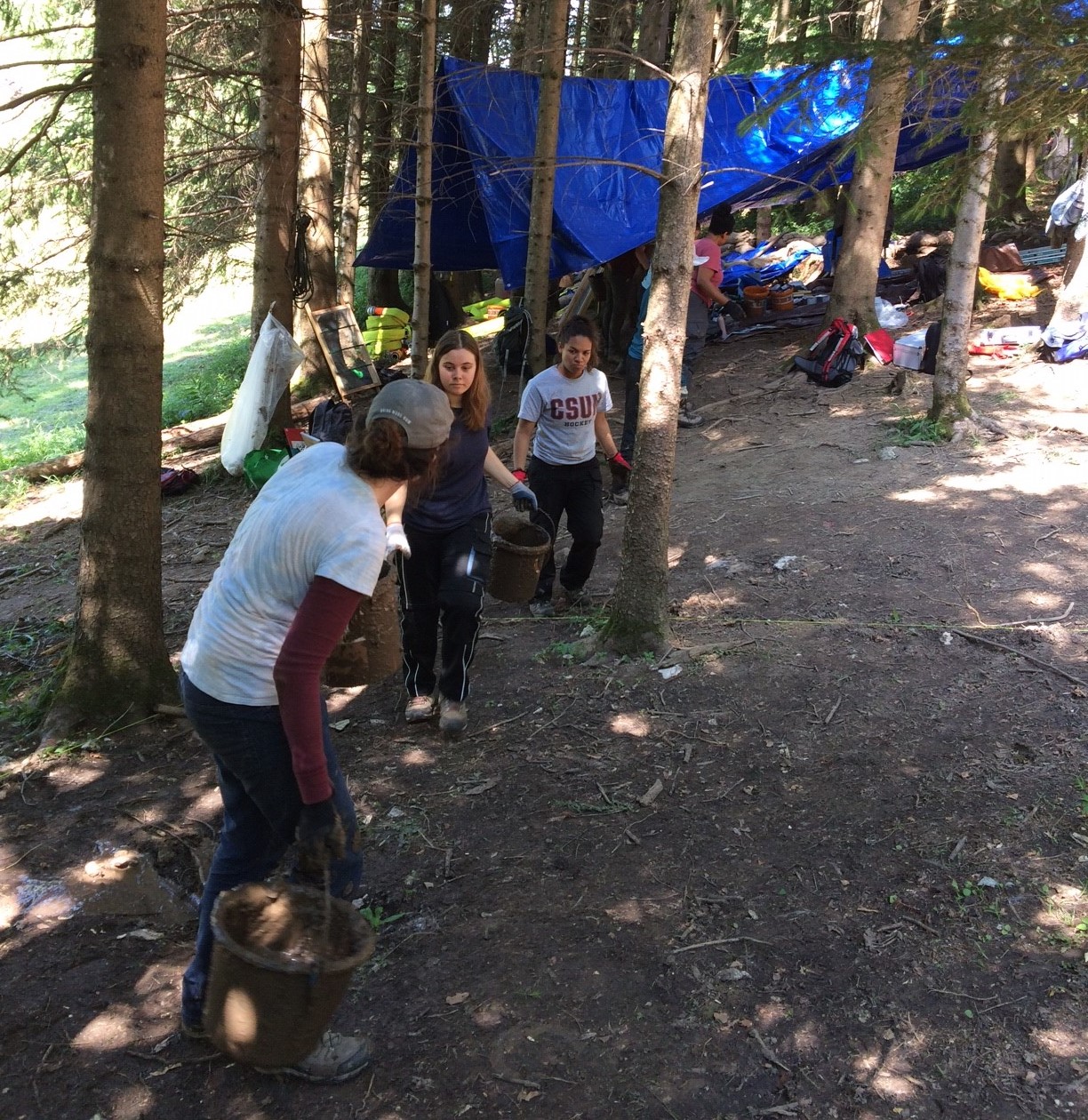
Teaching assistant and University of Maryland anthropology master’s program graduate Sarah Grady forming a bucket brigade with students, Bettina Stütz and Markie Quintana, to backfill test units in 2018
The program balances the demands of a recovery excavation with the need to include instruction and training in archaeological field methods and forensic anthropology recovery techniques. The field school also provides context to the war through field trips to important sites and a host of cultural experiences to broaden students’ understanding of Austria and studying abroad.
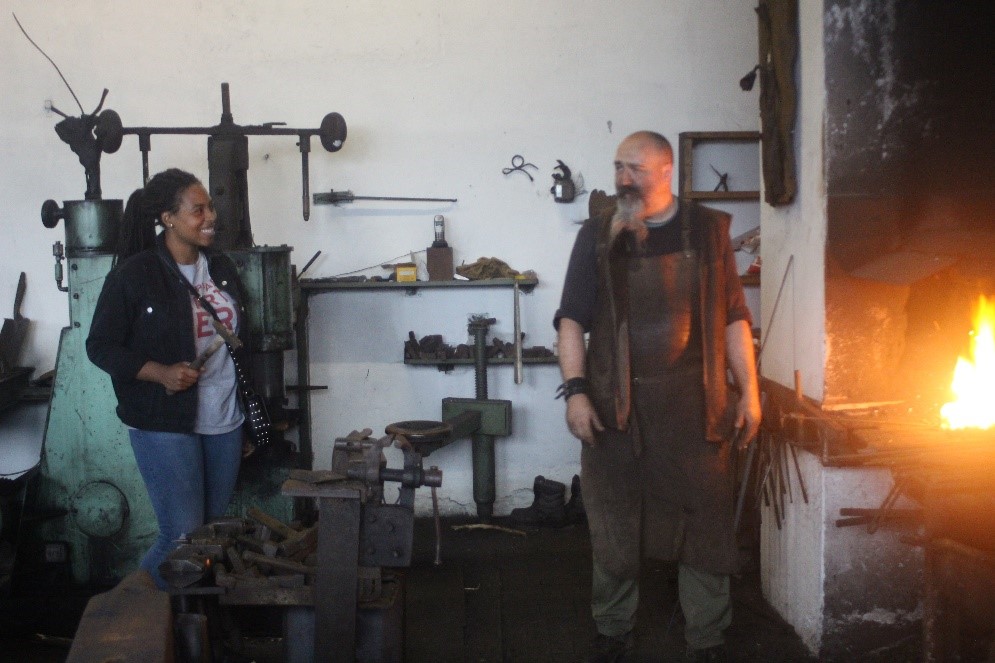
Marli Richmond, a George Washington University anthropology student (2017) and later field school teaching assistant (2018), trying her hand at blacksmithing courtesy of University of Vienna student and blacksmith, Alex Sieghartsleitner.
Over the last two years, the course has provided instruction for 19 students from the University of Maryland, George Washington University, and universities across the country. At the same time, nine students from the University of Vienna also learned archaeological field methods from the course. The success of this collaboration can be seen in the following brief comments of recent graduates of the 2018 Forensic Aviation Archaeology Field School.

Marlow Twombly(pictured above), an undergraduate anthropology field school student from the University of Maryland and pictured here during the field trip to Salzburg, stated that “This field school was one of the most fulfilling experiences of my life. I learned valuable archaeological field methods that I will use in my future career, and I felt a part of something much bigger than myself and important to the families of missing World War II soldiers from our country. Traveling around Austria opened my eyes to other ways of life while creating a bridge with a different culture. I now feel more confident in my choice of profession and have made connections that will last a lifetime.”

Another University of Maryland anthropology undergraduate student, Carolyn Mobley, pictured here during the field trip to Hallstatt, felt she had a great experience during the field school. “On site, I learned valuable archaeological field methods and recovery techniques, which I will continue to use in the future. Knowing that I was involved in the recovery of the remains of World War II soldiers whose plane crashed changed my perspective on the learning experience. Aside from the importance of the excavation itself, the field trips we took in Austria were amazing. I really enjoyed touring the salt mines in Hallstatt where we got to use the same wooden slides that miners used to get to different areas in the mine.”
The University of Maryland Field School was fortunate to collaborate with archaeologists from the University of Vienna, including Claudia Theune, Thomas Atzmüller, and Peter Hinterndorfer, and their students. The students from the University of Vienna learned and worked alongside students taking the course through the University of Maryland.

One of these students, Bibiana Dernec (pictured on the right), who is now a graduate student at the University of Vienna studying prehistoric and historical archaeology and anthropology, took the field school again in 2018. “In the course of my studies we have to participate in field schools to gain on-site experience, and I was very fortunate to join the Forensic Aviation Archaeology field school for a second time. Besides practicing our Austrian methodology and getting more practical experience in the archaeological field, I learned a bit about the archaeological methodology practiced in the US and used in documenting their sites and findings and how they measure, grid, and work. Experiencing the working and processing of these differences in method from two countries made this field school a unique experience. I am very happy that I had the opportunity to learn from American and Austrian archaeologists and was able to be part of a very important and interesting project.”

2018 Forensic Aviation Archaeology Field School Participants

2017 Forensic Aviation Archaeology Field School Participants
Based on the successful partnerships developed over the last two years, we plan on offering the Forensic Aviation Archaeology Field School again through the University of Maryland in the summer of 2019. We encourage anyone interested to contact Marilyn London (mlondon@hers.com) and Adam Fracchia (fracchia@umd.edu) for further information.
Published on Thu, 09/06/2018 - 12:26