
UMD College of Behavorial & Social Sciences UMD College of Behavorial & Social Sciences
MENU

Topbar Menu

  • About Us
  • People
  • Undergraduate
    • Prospective Students
      • Why Major In Anthropology At UMD?
      • Why Major In Anthropology At UMD?
      • What do UMD Anthropology Majors do?
      • What do UMD Anthropology Graduates do?
      • How to become an Anthropology Major?
    • Current Students
      • Advising
      • Academic Opportunities
      • Internships and Career Development
      • Community and Support
  • Graduate
    • Graduate Studies
    • Graduate Studies
    • PhD Program
    • MAA Program
    • MPS CHRM
    • MAA/MHP Dual Degree
    • Certificate Programs
    • Graduate Student Resources
    • Funding Options
  • Research
    • Health
    • Health
    • Heritage
    • Environment
    • Genetics & Evolution
Search

Main navigation

  • Undergraduate
    • Prospective Students
      • Why Major In Anthropology At UMD?
      • What do UMD Anthropology Majors do?
      • What do UMD Anthropology Graduates do?
      • How to become an Anthropology Major?
    • Current Students
      • Advising
      • Academic Opportunities
      • Internships and Career Development
      • Community and Support
  • Graduate
    • Graduate Studies
    • PhD Program
    • MAA Program
    • MPS CHRM
    • MAA/MHP Dual Degree
    • Certificate Programs
    • Funding Options
    • Graduate Student Resources
  • Research
    • Health
    • Heritage
    • Environment
    • Genetics & Evolution
  • About Us
  • Diversity and Inclusion
  • People

Search our site:

Housing Conditions and Health of Immigrant Farmworkers in Maryland
Breadcrumb

  • Home
  • Featured Content
  • Housing Conditions and Health of Immigrant Farmworkers In Maryland
farmworkers

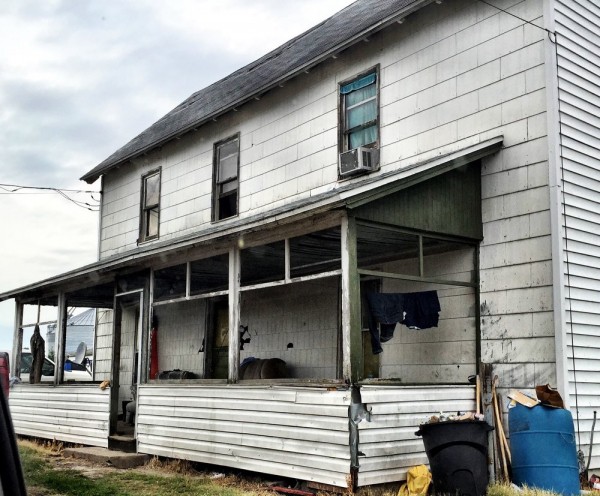
This summer, Dr. Thurka Sangaramoorthy and Emilia Mercedes Guevara accompanied farmworkers in Dorchester County, Maryland to address the quality and condition of their housing and the effect that it has had on their physical and emotional health. Their research on health issues associated with inadequate housing conditions of immigrant farmworkers is discussed in a recent post on Dr. Sangaramoorthy’s blog:

“Immigrants provide a significant amount of agricultural labor in the United States and often live and work in exploitative conditions and substandard housing. Farmworkers are willing to accept poor quality or crowded housing provided by their employer because it is difficult to find alternate housing options due to fear, lack of housing availability, severe financial constraints, language barriers, and lack of transportation. Farmworkers can sometimes pay exorbitant rents for dilapidated apartments, motel rooms, trailers, mobile homes, barns or sheds and, frequently, basic necessities like adequate sanitation, safe water and electricity are lacking.

Inadequate housing affects farmworker physical and mental health due to exposure to chemicals like pesticides, biological agents like infectious diseases, physical hazards like live wires, and mental and psychological stressors like fear and social isolation. Provisions of the Occupational Health and Safety Act (OSHA) require employers to meet sanitation standards and labor camp housing standards as well as offer workers access to safety equipment. However, appropriations riders prohibit federal health and safety inspections at small farms (less than 11 farmworkers) and exempt those same farms from OSHA’s worker protection provisions.

This summer, we accompanied farmworker outreach workers and encountered farmworkers living just minutes apart in Dorchester County, Maryland who lived in vastly different conditions.”

To read the rest, click here.

Published on Thu, 10/06/2016 - 12:24

College of Behavioral & Social Sciences

Department of Anthropology

1111 Woods Hall
4302 Chapel Ln
College Park, MD 20742

Phone: 301-405-1423 
Fax: 301-314-8305

Email: @email 

Links
  • UMD Land Acknowledgement
  • UMD Staff Directory
  • UMD Web Accessibility
  • Alumni
© 2026 College of Behavioral & Social Sciences. All Rights Reserved.
Login