
UMD College of Behavorial & Social Sciences UMD College of Behavorial & Social Sciences
MENU

Topbar Menu

  • About Us
  • People
  • Undergraduate
    • Prospective Students
      • Why Major In Anthropology At UMD?
      • Why Major In Anthropology At UMD?
      • What do UMD Anthropology Majors do?
      • What do UMD Anthropology Graduates do?
      • How to become an Anthropology Major?
    • Current Students
      • Advising
      • Academic Opportunities
      • Internships and Career Development
      • Community and Support
  • Graduate
    • Graduate Studies
    • Graduate Studies
    • PhD Program
    • MAA Program
    • MPS CHRM
    • MAA/MHP Dual Degree
    • Certificate Programs
    • Graduate Student Resources
    • Funding Options
  • Research
    • Health
    • Health
    • Heritage
    • Environment
    • Genetics & Evolution
Search

Main navigation

  • Undergraduate
    • Prospective Students
      • Why Major In Anthropology At UMD?
      • What do UMD Anthropology Majors do?
      • What do UMD Anthropology Graduates do?
      • How to become an Anthropology Major?
    • Current Students
      • Advising
      • Academic Opportunities
      • Internships and Career Development
      • Community and Support
  • Graduate
    • Graduate Studies
    • PhD Program
    • MAA Program
    • MPS CHRM
    • MAA/MHP Dual Degree
    • Certificate Programs
    • Funding Options
    • Graduate Student Resources
  • Research
    • Health
    • Heritage
    • Environment
    • Genetics & Evolution
  • About Us
  • Diversity and Inclusion
  • People

Search our site:

Immigrant Health on Maryland’s Eastern Shore
Breadcrumb

  • Home
  • Featured Content
  • Immigrant Health On Maryland’s Eastern Shore
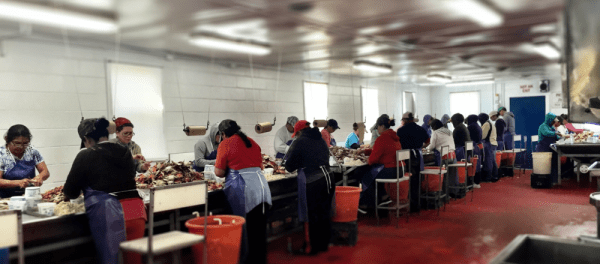
Crab Pickers at Work, Hooper's Island

The Immigrant Health on Maryland’s Eastern Shore project led by Dr. Thurka Sangaramoorthy and PhD student Emilia M. Guevara continued this summer with ethnographic research focused on various immigrant communities and their health care needs, including (1) migrant and immigrant communities in Somerset County, (2) Haitians working in Delmarva’s poultry industry, and (3) migrant Mexican women working in Maryland’s famous crab industry.

Somerset County: A Crisis in Health

Somerset County, the poorest county in Maryland, has the highest poverty rate in the state and has some of the greatest need for health care access in the state. Somerset County has an immense need for healthcare facilities (i.e. private and public healthcare services, hospitals, and emergency transport services) and trained healthcare professionals.

One Level Apartments 

Haitians and the Poultry Industry on the Delmarva Peninsula

Haitian immigration to Maryland’s Eastern Shore is growing. Many of these individuals currently work in the poultry industry, were former workers, or have family or friends who work in the industry.
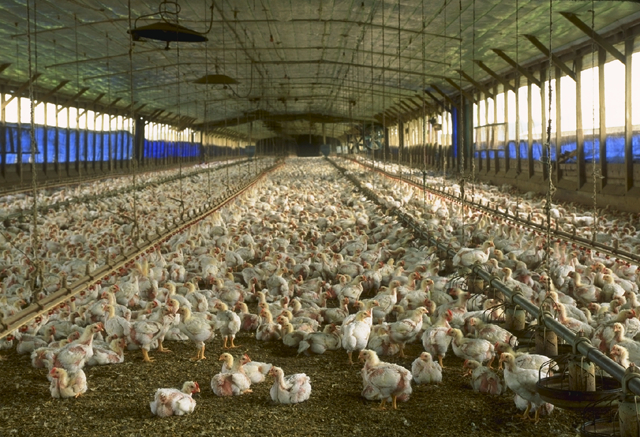
Commercial Meat Poultry House. Photo courtesy wikicommons and USDA

Hooper's Island: The Place that Time Forgot

In addition, the research focused on the migrant women in the Maryland crab industry who enter the United States through the H-2B visa program.These women reside on the Eastern Shore from April-November each year and represent a significant portion of the crab industry workforce yet little is known about their lives and health and social service needs.
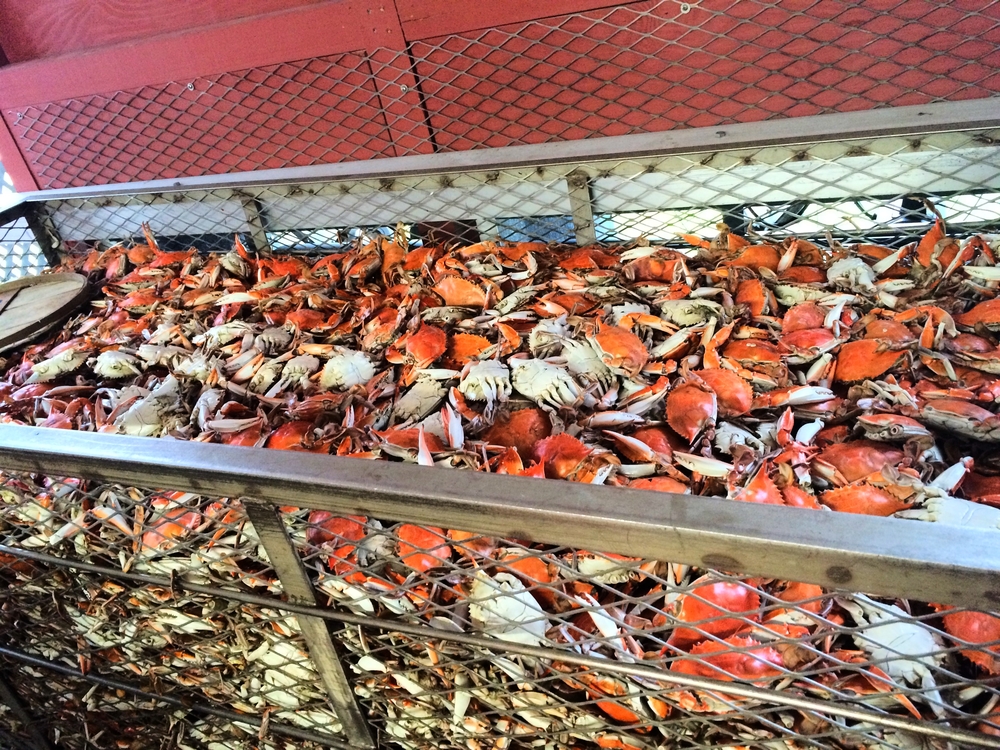
Freshly Steamed Crab Ready to be Processed

Published on Wed, 09/09/2015 - 13:26

College of Behavioral & Social Sciences

Department of Anthropology

1111 Woods Hall
4302 Chapel Ln
College Park, MD 20742

Phone: 301-405-1423 
Fax: 301-314-8305

Email: @email 

Links
  • UMD Land Acknowledgement
  • UMD Staff Directory
  • UMD Web Accessibility
  • Alumni
© 2026 College of Behavioral & Social Sciences. All Rights Reserved.
Login