
UMD College of Behavorial & Social Sciences UMD College of Behavorial & Social Sciences
MENU

Topbar Menu

  • About Us
  • People
  • Undergraduate
    • Prospective Students
      • Why Major In Anthropology At UMD?
      • Why Major In Anthropology At UMD?
      • What do UMD Anthropology Majors do?
      • What do UMD Anthropology Graduates do?
      • How to become an Anthropology Major?
    • Current Students
      • Advising
      • Academic Opportunities
      • Internships and Career Development
      • Community and Support
  • Graduate
    • Graduate Studies
    • Graduate Studies
    • PhD Program
    • MAA Program
    • MPS CHRM
    • MAA/MHP Dual Degree
    • Certificate Programs
    • Graduate Student Resources
    • Funding Options
  • Research
    • Health
    • Health
    • Heritage
    • Environment
    • Genetics & Evolution
Search

Main navigation

  • Undergraduate
    • Prospective Students
      • Why Major In Anthropology At UMD?
      • What do UMD Anthropology Majors do?
      • What do UMD Anthropology Graduates do?
      • How to become an Anthropology Major?
    • Current Students
      • Advising
      • Academic Opportunities
      • Internships and Career Development
      • Community and Support
  • Graduate
    • Graduate Studies
    • PhD Program
    • MAA Program
    • MPS CHRM
    • MAA/MHP Dual Degree
    • Certificate Programs
    • Funding Options
    • Graduate Student Resources
  • Research
    • Health
    • Heritage
    • Environment
    • Genetics & Evolution
  • About Us
  • Diversity and Inclusion
  • People

Search our site:

Medical Anthropology Special Issue
Breadcrumb

  • Home
  • Featured Content
  • Medical Anthropology Special Issue
Medical Anthropology Special Issue

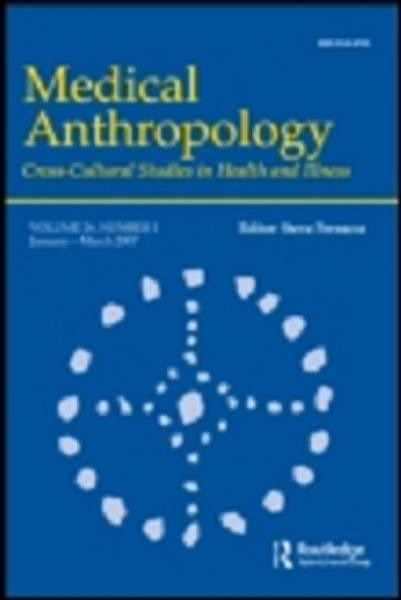
Check out this special issue on Medical Anthropology, co-edited by our very own, Dr. Thurka Sangaramoorthy.


Abstract

Although the production of national spaces, citizens, and populations through enumerative practices has been well explored in a variety of disciplines, anthropological methods and analysis can help to illuminate the everyday practices of enumeration, their unexpected consequences, and the co-construction of identities through these processes by both the “counted” and the “counters.” The authors in this special issue illustrate how enumeration inflects lived experiences, produces subjectivities, and reconfigures governance. Focusing on the spatial, temporal, ideological, and affective dimensions of the techniques of enumeration, the authors also provide insights into the multiple forms of biopolitical expertise and knowledge that accumulate legitimacy through numerical discourse. They also highlight the ways in which governing structures, institutional and cultural norms, market logics, and rational–technical interventions influence the relationship among numerical categories, subjectivity, and everyday experience.


Published on Thu, 08/02/2012 - 10:01

College of Behavioral & Social Sciences

Department of Anthropology

1111 Woods Hall
4302 Chapel Ln
College Park, MD 20742

Phone: 301-405-1423 
Fax: 301-314-8305

Email: @email 

Links
  • UMD Land Acknowledgement
  • UMD Staff Directory
  • UMD Web Accessibility
  • Alumni
© 2026 College of Behavioral & Social Sciences. All Rights Reserved.
Login