UMD Anthropologists Engage in New International, Interdisciplinary Research Program on Soils and Human Cultural Dynamics During the Holocene
This summer, Dr. Sean Downey, assistant professor of anthropology, and Dr. Bruce James, emeritus faculty in environmental sciences and technology, took four UMD graduate students (including anthropology students Kevin Gibbons and Adriane Michaelis) to southwest Germany to participate in the first meeting of a two-year joint graduate training program in soil sciences, anthropology, and archaeology. The UMD group collaborated with faculty and graduate students at the University of Tübingen from complimentary research backgrounds. The program is designed to train students to use the languages, methods, and theories of anthropology, archaeology, and pedology to conduct interdisciplinary research on the interactions between soils and human cultures during the Holocene, a time characterized by dramatic change in climatic patterns and natural resource availability. The research team will compare and analyze prehistoric and historically known cultures, land use practices, and soil knowledge in southern Germany and the eastern United States, exploring how these landscapes and soils have interacted with communities over the millennia since the retreat of the last continental glaciers.
The first season of the project kicked off with an interdisciplinary meeting at the University of Tübingenfocusing on Resources in Social Context(s): Curse, Conflict, and the Sacred. The conference was followed by two weeks of field excursions, laboratory work, and discussions at various Upper Paleolithic, Mesolithic, Bronze- and Iron-Age sites in the Baar – Black Forest – Swabian Alb region of Baden-Württemberg. Next year, the group willcontinue the project with parallel studies in both Maryland and New Hampshire.
Specific research questions to be explored through the project are:
1. How did soils shape human cultural change during a time of dramatic and rapid climate change, and how did humans change soils and create an archive of their lifestyles on the land?
2. How did the dynamics of human soil interactions differ between favorable and unfavorable regions, e.g. formerly glaciated, periglacial, and unglaciated landscapes as humans deforested the land?
3. What are differences between southwestern Germany and northeastern United States with respect to human land uses, soil properties, and cultural change during the time since the retreat of the continental glaciers?
4. How do the use of language in scientific discourse, methods of investigation, sources of knowledge, and writing styles in anthropology and soil science shape our understanding of the past and the narratives we write in our publications?
5. How do the cultures, values, and philosophy of science in Germany and the United States influence the way research is conducted, results are interpreted, and publications are written; especially in interdisciplinary research?
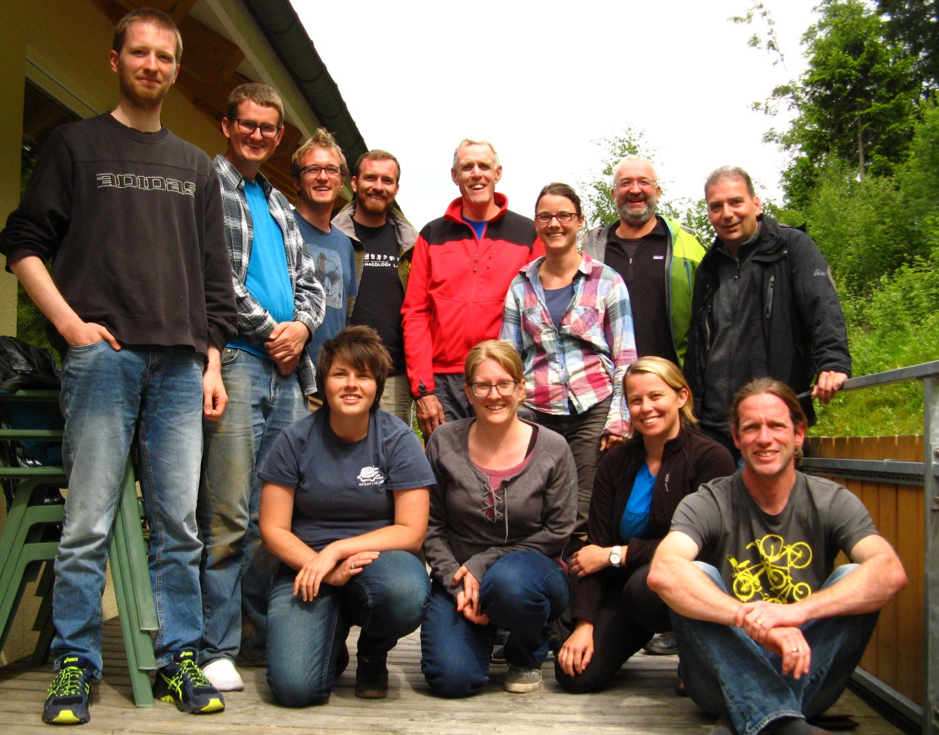
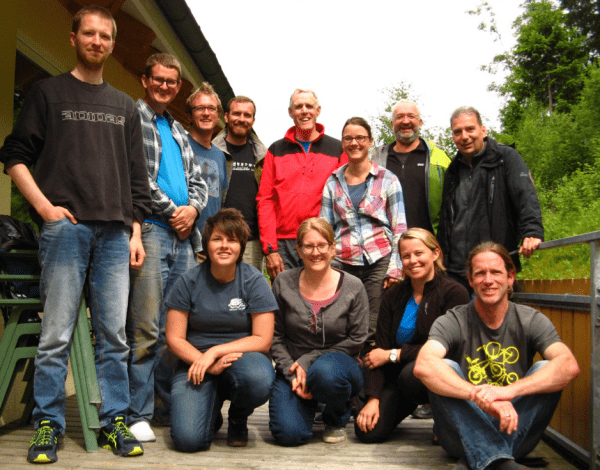
Figure 1. Faculty and students involved in the UMD-UT project. (From left to right, back row: Jan Ahlrichs [UT], Barret Wessel [UMD], Heribert Beckmann [UT], Kevin Gibbons [UMD], Dr. Bruce James [UMD], Jessica Henkner [UT], Dr. Peter Kühn [UT], Priv.-Doz. Dr. Thomas Knopf [UT]; front row: Sara Mack [UMD], Sandra Teuber [UT], Adriane Michaelis [UMD], Dr. Sean Downey [UMD]; Not pictured: Prof. Dr. Thomas Scholten [UT])
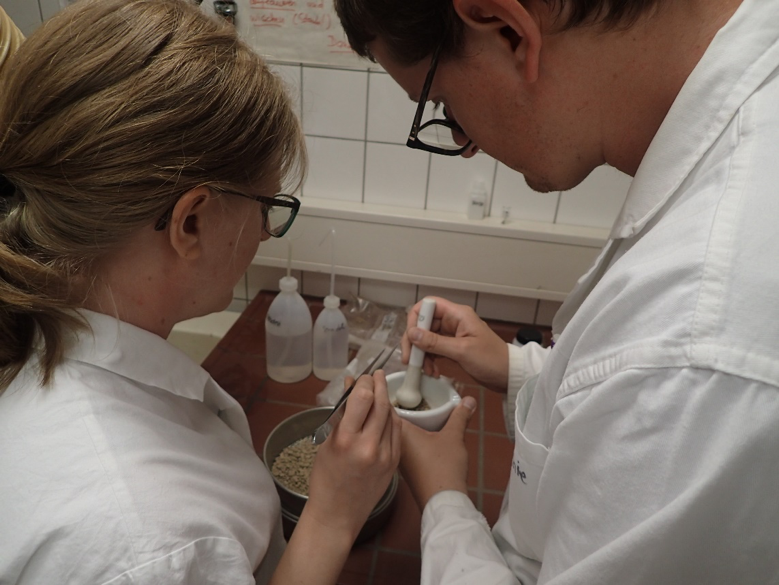
Figure 2. Students processing soil samples in the laboratory.
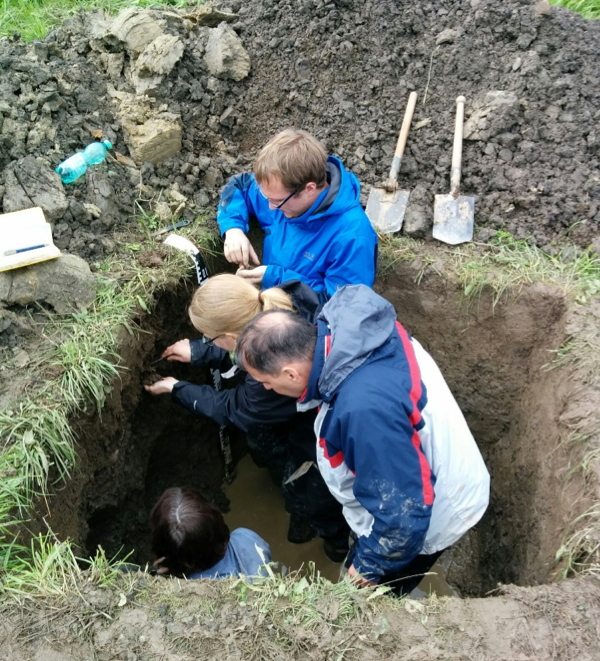
Figure 3. Students and faculty describing soil characteristics of a soil pit in southwest Germany.
Published on Mon, 08/29/2016 - 13:19