

UMD Expert on National Panel Recommending Reducing Violence Without Police
Amid a national debate over whether funding for police departments should be shifted to other priorities in the wake of multiple shootings of Black Americans, a University of Maryland expert on gun violence has joined other academics across the country to recommend strategies that could ensure health and security without involving law enforcement officials.
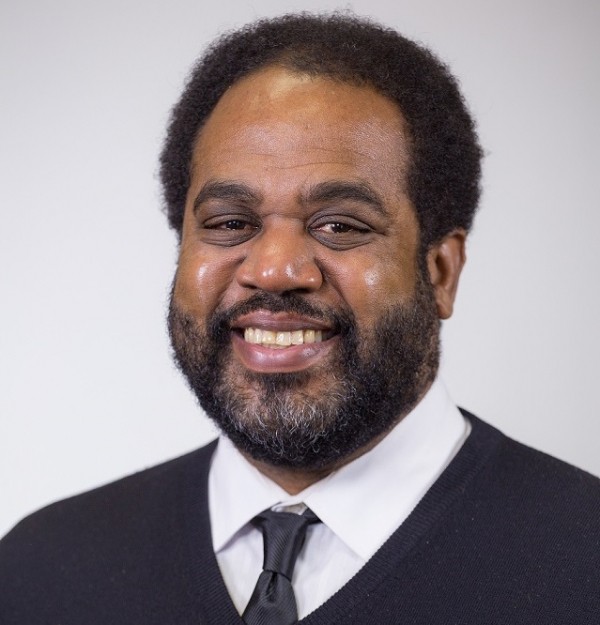
Joseph Richardson Jr., interim chair of the Department of African American Studies and the Joel and Kim Feller Endowed Professor of African American Studies and Anthropology, was a member of the 12-member research team behind the report released this week and said it’s incumbent upon policymakers to finally back up their words with action.
“The government picks and chooses what it wants to address,” Richardson said. “If gun violence was the leading cause of death for young white men, wouldn’t we have solved the issue a long time ago?”
The report was compiled by the John Jay College Research Advisory Group on Preventing and Reducing Community Violence in collaboration with Arnold Ventures, a philanthropic group focused on criminal justice, health, education and public finance initiatives. It includes seven policy recommendations:
- Improve the physical environment in high-crime neighborhoods with more green space, better housing and public spaces with good lighting for pedestrians;
- Strengthen anti-violence social norms and peer relationships with outreach workers who bond with individuals at highest risk and connect them with resources;
- Engage and support young people with employment, mentorship and training programs;
- Reduce substance abuse through limits on alcohol access and availability and increasing treatment;
- Ease financial stress by coupling short-term income assistance with behavioral therapy programs;
- Increase the justice system’s transparency, openness and consistency, and demonstrate that police departments are willing to address complaints from the community;
- Establish uniform gun policies that restrict access for young people and individuals with violent crime backgrounds, impose waiting periods and increase training requirements.
The report stated that If deterrence were entirely sufficient to prevent violence and ensure public safety, the United States would undoubtedly enjoy one of the lowest rates of community violence in the world since America has drastically expanded its investments in policing and prisons during the past 50 years.
“Effective violence prevention, however, involves strategies beyond deterrence,” the report says. “It requires investments in communities and organizations other than police and the justice system.”
Policing has been under intense scrutiny following a succession of fatal encounters between police and citizens, most notably George Floyd in Minneapolis, who was killed by a police officer kneeling on his neck for more than eight minutes. Protests throughout the summer revolved around the need to “defund the police” and redistribute taxpayer money earmarked for law enforcement into other social services.
Richardson said it’s time to finally address the historic disparities of funding between issues that affect minorities, such as the crack-cocaine epidemic, and those that are prominent among white Americans, such as opioid abuse.
“It’s very clear there’s a racial component, and we can’t just sweep it under the table,” he said. “We need to confront it directly.”
Story by Liam Farrell originally appeared in Maryland Today on Nov. 11, 2020.
Published on Mon, 11/23/2020 - 13:30