

Violence Against Women: Policy and Practice in Uganda — Promoting Justice within the Context of Patriarchy
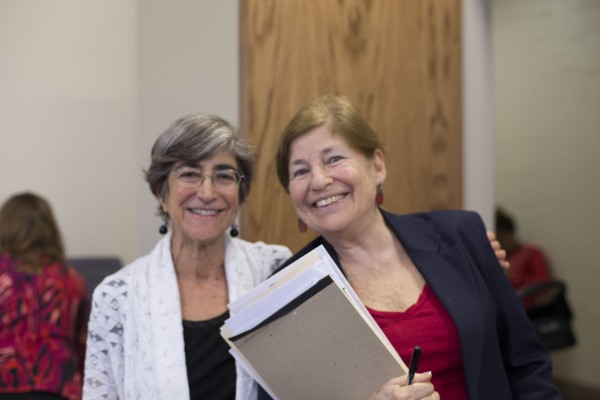
Congratulations to Diane Gardsbane who defended her dissertation titled, Violence Against Women: Policy and Practice in Uganda — Promoting Justice within the Context of Patriarchy, in December and passed! Dianeconducted multi-sited ethnographic research in Uganda to understand how and whether policy and practice relating to violence against women, especially Uganda’s Domestic Violence Act of 2010, have had an effect on women’s beliefs and practices, as well as on support and justice for women who experience abuse by their male partners. Diane will be graduating with her Ph.D. this upcoming May. Congratulations, Diane!
Violence Against Women: Policy and Practice in Uganda — Promoting Justice within the Context of Patriarchy
Advisor: Judith Freidenberg
The goal of this study was to understand how and whether policy and practice relating to violence against women in Uganda, especially Uganda’s Domestic Violence Act of 2010, have had an effect on women’s beliefs and practices, as well as on support and justice for women who experience abuse by their male partners. Research used multi-sited ethnography at transnational, national, and local levels to understand the context that affects what policies are developed, how they are implemented, and how, and whether, women benefit from these. Ethnography within a local community situated global and national dynamics within the lives of women.
Research highlighted that women who experience violence against women within their intimate partnerships in Uganda confront a political economy that undermines their access to justice, even as a women’s rights agenda is working to develop and implement laws, policies, and interventions that promote gender equality and women’s empowerment. Diane’s dissertation provides insights into the daily struggles of women who try to utilize policy that challenges duty bearers, in part because it is a new law, but also because it conflicts with the structural patriarchy that is engrained in Ugandan society.
Two explanatory models were developed. One explains factors relating to a woman’s decision to seek support or to report domestic violence. The second explains why women do and do not report DV. Among the findings is that a woman is most likely to report abuse under the following circumstances: 1) her own, or her children’s survival (physical or economic) is severely threatened; 2) she experiences severe physical abuse; or, 3) she needs financial support for her children. This research also highlights three supportive factors for women who persist in reporting DV. These are: 1) the presence of an “advocate” or support 2) belief that reporting will be helpful; and, 3) lack of interest in returning to the relationship.
Published on Wed, 01/27/2016 - 13:47